
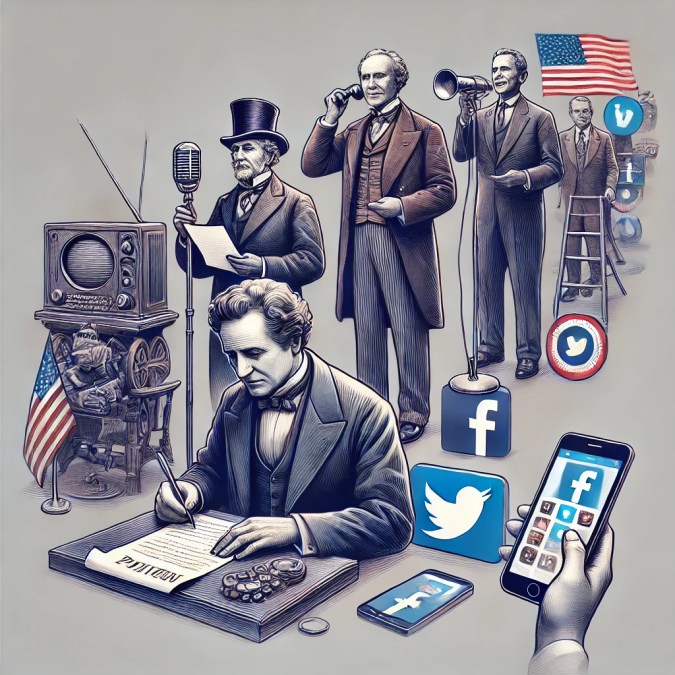
Presidents Day is a time to honor the leaders who have shaped the United States through vision, determination, and leadership. One of the most significant aspects of presidential leadership has been communication. From handwritten letters to digital diplomacy, the way U.S. presidents communicate with the public has evolved dramatically over the centuries. This blog explores the transformation of presidential communication and its impact on leadership and governance.
Early Presidential Communication: Letters and Public Addresses
In the early days of the republic, presidents relied on written correspondence and public addresses to communicate with citizens. George Washington, for example, set the precedent for direct messages to the American people with his Farewell Address in 1796, which was published in newspapers across the country.
Thomas Jefferson and John Adams exchanged extensive letters that provided insight into their governance philosophies, many of which are still studied today. Newspapers played a crucial role in disseminating presidential messages, often shaping public perception of policies and leadership.
The Rise of Mass Media: Radio and Television
The advent of mass media in the 20th century transformed presidential communication. Franklin D. Roosevelt mastered the use of radio with his famous Fireside Chats, which reassured the nation during the Great Depression and World War II. These radio addresses allowed Roosevelt to speak directly to millions of Americans in an intimate and reassuring manner.
Television further revolutionized presidential communication. John F. Kennedy’s televised debates with Richard Nixon in 1960 demonstrated the power of visual media in shaping public opinion. Kennedy’s confident and charismatic presence on TV helped secure his victory, setting a new standard for presidential image-making.
The Digital Revolution: The Internet and Social Media
The late 20th and early 21st centuries ushered in the digital age, changing presidential communication once again. Bill Clinton was among the first presidents to launch a White House website, while Barack Obama leveraged social media to engage with younger voters during his campaigns.
The rise of platforms like Twitter and Facebook enabled presidents to bypass traditional media and speak directly to the public. Donald Trump’s use of Twitter as a primary mode of communication was unprecedented, allowing him to engage, announce policies, and react to events in real time. Similarly, Joe Biden has used digital platforms to communicate about national policies and initiatives in a more structured and deliberate manner.
The Future of Presidential Communication
As technology continues to evolve, so too will presidential communication. Some key trends shaping the future include:
- Artificial Intelligence and Automation: AI-driven tools may assist presidents in speechwriting, public engagement, and policy analysis.
- Virtual and Augmented Reality: Future presidents may utilize immersive experiences to connect with citizens on a deeper level.
- Cybersecurity and Information Integrity: With the rise of misinformation, ensuring accurate and secure communication will be a top priority for future administrations.
Conclusion
From handwritten letters to tweets and livestreams, presidential communication has undergone a profound transformation. Each new medium has brought opportunities and challenges, shaping the way leaders interact with the public and influence policy. As we celebrate Presidents Day, it is essential to recognize the evolving role of communication in leadership and its impact on governance in the modern era.
Sources:
- Library of Congress. (2024). “Presidential Letters and Public Addresses.”
- National Archives. (2024). “The Evolution of Presidential Communication.”
- Pew Research Center. (2024). “Social Media and Political Communication Trends.”
Related from DirecTech: all-inclusive office in the cloud. One provider, one bill — call 1-866-832-7117 or get in touch.
